Search This Blog

Showing posts with label gameboy color. Show all posts

Sunday, January 19, 2014

Retro Review: Metal Gear Solid Gameboy/Metal Gear Ghost Babel

  -Introduction-

Metal Gear Solid on the original Playstation remains one of the most popular titles of all time, giving birth to the Metal Gear Solid series of games which remain legendary for their excellent gameplay, captivating storylines and impeccable voice acting. People know all of this already, but what some may not know is that Konami also produced a Metal Gear game on Nintendo's Gameboy Color, nearly two years after the release of Solid. In Japan it was known as Metal Gear: Ghost Babel, but renamed to Metal Gear Solid in North America, presumably to take advantage of the success of its Playstation predecessor.

    Fans who may have seen the GBC version of Metal Gear Solid laying beneath the glass of the display case in video game shops may have dismissed it as a crappy, 8-bit version of a game they love for the small screen. Those people, however, would be dramatically incorrect in their assessment. Featuring a brand-new story, surprisingly solid (no pun intended) graphics, and effective, familiar gameplay, Metal Gear Solid on the Gameboy color stands as one of the most impressive Gameboy titles of all time. There are many modes of play in this game, but for this review, we'll focus on the main game as well as the VR Missions.

    This non-canon story follows Solid Snake seven years after his mission at Outer Heaven. Recruited by Colonel Cambell to defuse another potential world disaster, Snake finds himself back in Galuade to confront the demons of the past as well as the demons of today. This time the terrorist struggle is spearheaded by a renegade group of elite soldiers known collectively as Black Chamber, each member boasting a dangerous special ability. Heading this group is Black Art Viper, a vindictive near-insane warrior specializing in tricks and traps.Snake must stop the terrorists from utilizing a new model of Metal Gear to launch a nuclear weapon.


  -Presentation-

An inauspicious start to the mission.
Graphics:   Graphically, Metal Gear Solid on the Gameboy Color is artistically average during regular gameplay but excels at details and movement. Solid Snake is drawn from 8 different angles, meaning that he will turn to face any direction in which he is running. The same is true for the enemy characters. Metal Gear's use of 8 angles is a subtle detail that goes a long way in improving overall presentation, although the character sprites are too small to show any facial features during the normal gameplay. Environments are rendered colorfully and clearly, and are successful in basically depicting that which they are meant to be, although the overall design of various indoor stages can tend to be a bit homogenous to each other. The game features several cutscenes in between chapters which feature the characters rendered in greater detail amidst generally generic backgrounds. These cutscenes are static much of the time with occasional, simple animations such as a turning head, shaking fist, or the graceful fluttering of Snake's trademark bandana. The Codec screen is designed very similarly to the one in Metal Gear Solid on the Playstation, even with some fun little screen noise effects and static on the images of the speaking characters. On this screen, character's faces are drawn in better detail, but aside from the screen noise effects they remain completely unanimated, even during exclamatory outbursts.


  Sound:  The game's sound effects are about par for the Gameboy Color era, but there are plenty of them, be they entirely different or recycled variants to at least retain some variety. Expect various forms of beeps, buzzes, and thuds. There are multiple explosion sound effects which sound pretty good for what they're working with. Like most Gameboy Color games there is no spoken dialogue, only captions.

And are you related to Sephiroth?
  Music: The music ranges from somewhat boring to excellent. Some of the music is original to the game while other tracks are based on their Playstation counterparts or even harken back to the original Metal Gear game of the 80's. Although none of the music is repetitive to the point of torture, some tracks can start to get old if you're stuck in any one area for enough time, especially since the music for many of the indoor areas is the same. The music really shines during boss encounters, boasting the kind of epic 8-bit boss music Konami is known for. While the boss music in the Playstation version tries for a more "epic" vibe, the music within this game is more of a heavy-metal, action-oriented sound to get the blood pumping for ass kicking. The best piece of music in the game is easily the music which plays during the final battle, returning to the series' epic-style roots and successfully conveying a sense of finality to the battle at hand.

    -Gameplay-
  
Main Game

    The gameplay of Metal Gear Solid on the GBC is the most impressive part of the game. Controls are responsive and movement is fluid and easy to handle. Despite the simplified design, the game incorporates many of the themes seen in the Playstation release. Stealth is a premium in this game, and the player is able to utilize many techniques to achieve it, including wall-hugging, tapping a wall to lure an enemy, crawling on the ground or into a crawl space, as well as in tall grass or under water to remain unseen. The player can also travel through the air ducts either to remain unseen or to gain access to an otherwise unreachable area. Controlling Snake is easy to learn with few detracting quirks.

Good thing snake isn't claustrophobic.
    As with the Metal Gear Solid we know and love, the player will try to find their way through various areas while picking up weapons, ammo, health-restoring rations and keycards for locked doors. Familiar facets of your mission also include having to blast your way through thin walls with plastic explosives, using remote controlled missiles to reach targets that Snake himself cannot, and utilizing night vision and thermal goggles see in the dark and/or detect infrared lasers. Including these themes into the game help to keep the gameplay from becoming a simple run-around in a series of glorified labyrinths.

 The in-game arsenal offered to the player is a bit smaller, including a Pistol, Assault rifle, C4 explosives, Landmines, Grenades, Chaff Grenades, Stun Grenades, and Nikita Missiles. It's enough to keep things more interesting although as with most Metal Gear games, most of your time is reasonably spent with just the pistol or the assault rifle in the case of large fights. Items such as body armor, a gas mask, and a landmine detector make their return as well. The "Fogger" device, which emits smoke to allow the player to see invisible laser beams, is likely the result of censoring, as the device looks suspiciously like Snake's trademark cigarettes and is already in the player's possession at the start of the game. The inclusion of these gadgets help bring the game further into familiar territory and add to its complexity.

  And of course, when out of other options, the player can slip into the trusty box.

I wish I were that relaxed.
  The enemies of the game aren't particularly smart but certainly aren't ineffectual. While knocking them out doesn't seem to convince them that something is amiss, they're fairly accurate with their gunfire and annoyingly effective with their gun-whipping. Enemy soldiers can become suspicious if the player taps on the wall or walks over some kind of noise-making floor, and will become alerted at the sound of any weapons discharging, save for the suppressed pistol. Once alerted to the player's presence, enemies quickly spawn from seemingly nowhere to surround Snake. Reasonably aware players will be able to evade or eliminate the enemies without much challenge but doing so while staying in the same area can be frustratingly difficult with the respawning. In many cases the player can take advantage of a little quirk by changing screens from one area to other in quick succession in order to eat away at the ALERT counter, as it takes a little while for enemies to spawn in the new area if one isn't already assigned there. It can also be annoyingly hard to regain the upper hand on an enemy after being knocked to the ground from a gun-whip, as Snake often won't be able rise and put enough distance between himself and an enemy to evade another knock-down. Snake's inability to quickly turn and attack an enemy in one swift motion can also lead to frustration. The standard battle system is simplistic but it's enough to motivate the player to remain unseen.

A surveillance camera!?
    Other enemies/obstacles remain such as surveillance cameras, gun-cameras, dogs, landmines, and trap-door floors in order to change up where your challenge comes from. Cameras can be temporarily snuffed out with a chaff grenade while mines can be detected with, yes, a mine detector.

There's a reason Claude always lets Jacques go first
 The game's replay value is increased with the varying difficulty levels. Your enemies' attack power and hit points varies with the chosen difficulty level, along with whether or not they can be killed by hand. On Hard or higher, only weapons will kill an enemy soldier which will greatly change your overall strategy experience.

It's on like Donkey Kong other fine Konami® games.
The boss encounters are adequate in providing a climax to each chapter of the game, even if they're not the kind of profound confrontations we've come to eagerly await in the Playstation release. The bosses are generally pretty simple to take down although on harder difficulty levels some of them are extremely frustrating, especially Marionette Owl whom you must fight in the dark and punishes you for striking the wrong target. Appropriately, the most challenging boss fight in the game tends to be showdown between Snake and Metal Gear itself, which is something that pretty much none of the console releases can say. The battle with the iron giant may not feel as epic as the fight in Metal Gear Solid on the Playstation, but it is enough to provide a suitable climax for the game to build to. And for what's it's worth, the design on Metal Gear is pretty darn good.

    The implementation of the Radar is passable but not stellar. It helps give a general idea of where nearby enemies are but it's not great for much else. Unlike Metal Gear Solid on the Playstation, there is no differentiation between dangerous enemies or objects. Soldiers, cameras, dogs, incoming missiles and landmines all appear as a redish dot. It's especially annoying when in a mine field that also happens to contain enemies (although that tends to happen more often in VR Training). There is also no more representation of an enemy's field of vision, so you'll be unable to see which way an enemy is face, and how close is too close.

In spite of the name this floor isn't entirely made of plastic explosives.
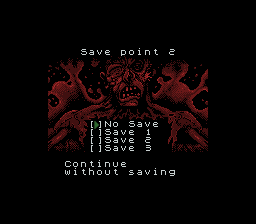
    Interestingly and unlike other Metal Gear games, while the overall gameplay remains similar to what we classically know as Metal Gear, the game is laid out in stages/levels, rating your performance after you complete each one (don't feel bad if your rating is almost always "terrible" it seems unavoidable the first time through...and for much of the subsequent play-throughs). It's easy to forget, however, that this format is in place, as there is usually decent time in between "chapters" while you're trying to figure out just exactly what to do to move on. The good thing about the stage format is that since you are unfortunately unable to save more than a single game at a time, you can at least go back to any stage you've cleared if you want to play that chapter over again. However, you will only be equipped with the items that are absolutely necessary for completion, so even if you had, say, body armor, an assault rifle, and a pistol suppressor during your initial play-through, those items will all be absent in Stage Select mode.

    Dying will either send you back to the beginning of the level you're in, or to the last significant item you picked up which, depending on where it was, could either be very convenient or extremely irritating. This is especially true for boss fights as dying there can mean a decent schlep ahead of you in order to get back to the fight. Certain items picked up between collecting the "checkpoint" item and whenever you died will have to be collected again, making death exceedingly annoying and paramount to avoid.

    As progress through the game is made, you'll see that the game's story is not nearly as riveting as the console releases, but it's enough to pique your interest as to what is going to happen next. Snake's inner struggle with his own haunted past is as present as it ever was, and annoyingly, so is his subtle fascination with a female, fellow soldier. As the plot progresses you'll see the government conspiracies that made the series famous as well as the usual, (though not as jarring) twists, unexpected pathos for your fallen enemies, and even a moment of tragedy (well it tries to be but the character at focus is a little too irritating for you to care that much). And of course, the whole stopping-the-nuke thing.

Snake considers himself more of a Bishop.
For the most part, the story is sound all the way through although it does fall short in hyping the eventual confrontation with the 'General' whom pilots Metal Gear in the game's most climactic battle. While the fight itself is good, Snake has had literally zero contact with the character up until this point, as he's only seen sporadically throughout the game, broadcasting threatening messages to the US government.

 VR Training

The evil polygons will pay for what they've done.
    Although the main game itself would be more than enough to be a called a complete handheld title, the game generously offers a plethora of VR Training missions for the player to train on or just have something fun to do after completing the main part of the game. The VR missions are essentially a series of mini-missions requiring the player to eliminate a certain number of targets, reach the goal undetected, or complete one of those tasks in a limited amount of time. Interestingly, there are more VR missions featured in this gameboy release than there are in the Playstation version of Metal Gear Solid. The VR missions include Sneaking Mode, Weapons mode, and an Advanced mode allowing the player to dispatch live targets, offering a total 75 unique stages and 180 challenges to complete, an amazing amount of content considering that some Gameboy Games of the time boast less content than what is featured in the VR missions alone.

Trouble brewing
    As expected, the VR missions take place in a virtual-reality world, basically an 8-bit version of the environment featured in the Playstation version. Some of the levels are even essentially identical to their Playstation counterparts. The mini-missions within allow for unique combat opportunities that don't necessarily appear in the main game, giving the player more opportunities to play with their favorite weapons. VR mode isn't necessarily the most thrilling part of the game, but to have so much bonus content in addition to a full game is a big plus. The incentive to complete the mode comes in the form of an unlockable Sound Test (remember way back when that was considered a reward in a game?).


  -Conclusion- 

 As one of the most complete gaming experiences to be licensed for the Gameboy Color, this fun alternative to Metal Gear Solid is indeed a must-have for any fan of the Metal Gear series or just for those who love quality handheld gaming. With a mountain of pros and very little cons, the game is sure to be enjoyable from start to finish, and one that will have players coming back for more soon after completion. Even among today's highly advanced handheld titles, Metal Gear Solid is certain to be among your favorites once you've make the highly recommended decision to make it a part of your handheld collection. Overall a 4.5 out 5 cephalapoint rating.


~Richard

Don't forget to stop by our shop:
 

Monday, September 13, 2010

Retro Review: Legend of Zelda: Link's Awakening DX

--Introduction--

The Legend of Zelda was a ground breaking game, offering a depth of adventure never before seen by gamers. As the years progressed several, equally as compelling sequels would spawn from the original classic. Those that would grace the heldheld genre proved to be some of the most unique spin-offs a video game series had seen. And as the first Legend of Zelda to be featured on Nintendo's own Gameboy system, Link's Awakening took the essentials that made The Legend of Zelda great with new, quaint features and gameplay that while not entirely traditional, were certainly not forgettable.
Link's Awakening DX Title Screen


The story begins with our hero Link sailing across the sea for reasons not ever revealed, just presumably for another quest. A vicious storm brews and while Link struggles to keep control of his ship, a bolt of lightning strikes the mast, and Link blacks out. He washes up on the beach of a mysterious, unidentified island. He his found by Marin, a sweet young girl with a fondness for animals and an affinity for singing. She brings him to the house she and her brother, Tarin, share. Here, Link tosses and turns until his eyes snap open to see a worried Marin at his bedside. Relieved at Link's revival, Marin tells him that he has washed up on Koholint Island. Not only that, but monsters have appeared and are acting very violently ever since Link washed ashore.

Link's Awakening waking up on Koholint Island


Link hops out of bed, and regains his inscribed shield from Tarin. He leaves their home, and ventures out into Mabe Village, a small, peaceful place with fluttering butterflies, frolicking animals, and playing children. Link travels down the lane, to the beach where he came ashore. Nearing the splintered wood of the wreckage site, Link finds the resting site of his trusty sword. As he approaches, he is accosted by a mysterious owl, who stops him and tells him that he will be unable to leave this island until he can wake the Wind Fish. Giving link instruction to start in the Mysterious Woods, the owl takes off back into the sky, as Link emphatically retrieves his sword.

Link's Awakening wake the Wind Fish


The adventure begins.

-Overview-

The heart of Link's Awakening remains true to the great, classic Zelda games. Ninety percent of the game is played in a top-down view, while Link (or whatever name you've decided on) swipes his sword out at enemies, blocks spears and stones with his shield, and places bombs, shoots arrows, sprinkles magic powder, and uses a variety of other tools and abilities to see the end of his quest. The gameplay could best be described as a perfect crease between the original classic, and the SNES masterpiece, A Link to the Past, boasting some of the more advanced features of ALTTP while maintaining a lot of the simplicity and control of the NES original.


The same can fairly be said about the graphics and sound. The look of the DX version of the game is very beautiful for the Gameboy age, which can be greatly attributed to the lovely coloring. However, even the original, colorless version of the game was an impressive introduction to what Nintendo's Gameboy could do. The art of the game is quite nice, not something that will blow you away such as the first time you saw A Link to the Past, but the detail and cartooning is certainly a few steps up from the first game. Flowers bounce happily up and down much like those found in ALTTP, and also like that game, you can slice through bushes and tall grass, followed by the animation of leaves being strewn about.

Link's Awakening Big Fish

Link's Awakening also features multi-level surfaces, such as standing on a ledge while your enemies cover the ground below, something that the original Zelda game did not have, making it a pretty impressive feature for an 8-bit hand-held system. Water is also animated in Link's Awakening, although it's not the best job you will see. Water at the shore line is a pretty good effort but everywhere else, it is a very basic graphic.

"Cut-scenes" can also be seen in the game, such as in the intro, during a photo sequence, the end, and in other areas. They boast higher detail and higher quality art that could maybe even stand up to simpler SNES games. However, the animation in these sequences is not complex by any means. Also, in some instances, the focus of the game will change from the normal view to a close up of a specific object or image. Once again, these sequences have very high art quality but are not animated. These changes in view and detail are one of the many features that sets this game apart from its NES and SNES cousins.

Link's Awakening Opening Cut Scene

The game has little for flaws in the sound department when you consider that most gameboy games of the time generally featured little more than a series of thuds and beeps. Link's Awakening, however, feature a slew of distinct sounds and music. Link's sword makes a clear "swipe" noise, while touching your items to a wall makes a little "clink" noise. Tapping your blade against a thin, destroyable wall adds a quaint echo to that noise. Not every sound indeed sounds like what it is, treading water is a very basic "whoob" noise, setting something on fire makes a generic hand-held type noise, but the mere variety that this early Gameboy game offered in sound is what truly sets it apart from what would otherwise be par.

Link's Awakening Marin Singing

Musically, we're talking about something very impressive for what it was. Once again, the quality of it can be identified somewhere between the NES and SNES age. At its core, the music is a series of beeps and buzzes with very, very basic electronic percussion. But put into the hands of the musical genius known as Koji Kondo, these bare elements can be turned into the great, complex, and memorable compositions that you will find in Link's Awakening. The main theme you will hear during gameplay is an altered version of the classic Legend of Zelda theme, half of which is the theme we all know and love, and the other half being a new and interesting twist while not losing the sense of adventure the original score instilled in us. Music changes when you enter different areas, such as the village or the forest. The village's music is simple, sweet, and conveys the peaceful living that takes place in the area. The forest's music gives a feel of mysterious while also a bit sneaky, which seems par for the moblins that live within it. Dungeon music stands out the most, as each dungeon features its own unique, eerie music, something that not even A Link to the Past could say for itself. While a couple of the dungeons' music could be described as the cave-area music slightly altered, there is still a difference between each dungeon, giving these areas a sense of individualism, and helping each stop be a specialized experience.  The Ballad of the Wind Fish, the theme song to the game's story, is arguably the most beautiful piece of music ever composed on an 8-bit Gameboy Game, boasting a tone of both sadness and hope, so impressively well put together that its reoccurring nature never becomes one of annoyance.

-Gameplay-

There are no unwanted changes here for the most part, and the mechanics of the gameplay are unchanged from the classic Legend of Zelda formats we know and love. You wander the map, swiping your sword at enemies and collecting rupees and other helpful supplies to aid you on your quest, while bombing through secret walls and talking to the occasional villager and other characters. The gameplay never changes much, but if you're familiar with Zelda then you know what you're getting into. You can at least be comforted knowing that the scenery does change quite a bit over the span of the game. There are some small, irking things that can start to wear just a bit on your nerves, a large example of this being the messages that appear every time you touch a rock or similar item before you can actually lift it. This goes for multiple obstacles in the game. Many of these messages cease to appear after you tackle the obstacles but it's not always an immediate thing.

Link's Awakening Link Lifting Rock


There isn't any shortage of items in this game, though with the constantly changing obstacles and situations to overcome, the lack of buttons make frequent visits to your item screen both necessary and a little annoying. You'll find yourself cursing link for being unable to both wear a bracelet and carry a feather. Interestingly, this is the first and only early Zelda game that allows you to change the controls for your sword and other items. You can control your sword with either A or B, same with other controls. This is nice if you find yourself to be more of an A masher rather than a B, and vice-versa.  In fact, you don't have to have your sword equipped at all.A con here would be that your shield isn't automatic and must be equipped to be used. You also have to push the button for Link to actually hold it in front of him. Due to the unending need to lift stones and jump gaps which require equipping other items, the shield will likely get very little use during your game.

Link's Awakening item Screen


While most of your special items will be discovered in dungeons, a few of these as well as basic items are available in the one and only supply shop in the entire game. Being the owner of the only shop available allows its purveyor to charge whatever we feels fit for an item, without fear of competition. It may not always seem fair, but there may be a way around it... .

Link's Awakening Shop

Naturally every "chapter" of the game ends with a dungeon. The lack of on-screen scrolling is a throwback to the old days in these areas but the much more elaborate layout of the dungeons and multiple floors is yet another mirror of A Link to the Past. Each visit to a dungeon reaches its conclusion with a final battle with the "Nightmare" monster, and then retrieving the Siren Instrument hidden beyond the door of the Nightmare's lair. Some complaints about the dungeons would first touch on collecting the compass, which annoyingly tells you all about its special features every time to get it, regardless of how many times you acquire it. Additionally, dungeons are very confusing in this game for a variety of reasons, mostly stemming from a lack of direction provided for you. There are multiple instances where your only hope of completing a dungeon is to bomb through a wall that has no visible cracks or weaknesses. Without a walkthrough, some players may find themselves stuck in an area for months or maybe longer before they discover the solution. Hints as to what you must do are often provided by finding the owl's beak (stone tablet-piece in the original release) and reuniting it with the rest of the owl/tablet, which will then give you a helping message. However, these messages range from patronizingly clear to mind-bendingly cryptic. This game is not recommended for those who don't consider themselves inquisitive.

Link's Awakening Dungeon


Sword play and dungeons are just one part of this very interesting and elaborate Nintendo title. There are several extra little fun things to partake in, such as...

fishing for prize money...

Link's Awakening Fishing

river rafting...
Link's Awakening River Rafting

and even a claw machine...

Link's Awakening Trendy Game


One of many things that make a good game would be features like these to hinder productivity.

Other quirky additions to this game that make it an oddity of the Legend
 of Zelda series would be things such as Phone Booths, hollowed out trees with an old-style telephone inside which you can use to call Old Man Ulrira to get help on what to do next in your adventure.

Link's Awakening Phone Booth

Next would be the Camera Shop, a little hut where you'll find an anthropomorphic rodent whom is an avid photographer and has chosen you as his new favorite subject. Throughout the game, you may find him waiting for you at strange and often hidden photo opportunities. All the photos he snaps of you will be stored in your Photo Album, available for viewing at his shop. Unfortunately, it's unlikely that you'll actually have the necessary accessories to print these photos but nonetheless, it's fun to try to find all of the often humorous photo ops throughout the game.

Link's Awakening Thief Photo

Unfortunately, there aren't much for side quests, as most of what seems like one actually turns out to be required for the game's completion. Some of these things can be done at different times but all and all, it eventually leads you to your main goal, which makes them less special. There are a few extra things to do/collect and the DX version of the game has one endeavor that could be considered a side quest but that would be the one and only example. More quests that lead to optional bonuses would make this game that much closer to perfect, but that's not to say it's not an exceptional title.

Interactions with Non-Playable Characters in Link's Awakening can be quite enjoyable if not a little repetitive at times. The things people say tend to be the same at any one time, but as the game progresses, so do their phrases and even actions. All of the characters in the game have distinctive personalities which boil down to their interest, lifestyle, and even style of speaking. At one point during gameplay, you are briefly joined on your quest by the game's main character (aside from yourself), Marin. During this time your interactions with her can be very deep but mostly just humorous and fun. Due to the new feature of item-trading in this game, some people you've already met will suddenly want the special item you're holding onto (do not worry, these items are useless to you for the most part). Giving them this item not only grants you a new one to trade, but can sometimes trigger a very amusing sequence with that character.

Link's Awakening House O' Bananas

While we've already spent a lot of this review comparing Link's Awakening to the original Legend of Zelda and A Link to the Past, it is worth mentioning, if not more with the following images, that this game in many ways could be called a Gameboy Color version of ALTTP (a better description before The Four Swords was released on the Gameboy Advance). Many of the same enemies, items, mechanics, and other aspects are straight out of the SNES classic. This isn't a negative thing, and is even a bit fun to see, again.


Now one thing that's immediately noticeable within Link's Awakening would be Nintendo's addition of perhaps...guest characters from past games? Rather than go into explicit detail, why don't you just take a look at the following images and ask yourself: does any of this look familiar to you?


Link's Awakening features very fun, classic-style gameplay that can keep you amused for hours. Along with this are graphics that are very pleasant to view, and sounds that are what all other hand-helds of the time should be measured against. Likable characters can offer a feeling of in-game companionship and compassion for their lives and fates. The story is one of mystery, discovery, and triumph over evil. As it unfolds, the tale manages to be exciting, funny, and even genuinely saddening. Once you've finished the entirety of this title you'll want to reset your Gameboy and start it all over again. And if only for that reason, this is why Link's Awakening is a truly genius part of the Legend of Zelda phenomenon.

Link's Awakening Link & Marin


It is just too bad that you have to eventually finish it.

~Richard

Don't forget to stop by our shop for Zelda and other retro gaming collectibles:

Tuesday, October 27, 2009

Retro Review Tuesday: Resident Evil Gaiden Gameboy Color

This is our first review for a handheld game/system.

Introduction
Many Resident Evil fans aren't even aware this title exists due to what seems like a large miscalculation by Capcom. It's a mature rated Gameboy color game based on a wickedly popular series of games that debuted on the Playstation. Many players old enough to appreciate blood, gore, and some good ol' fashioned zombie shooting fun weren't toting around GBCs. However, for those of us who were familiar with both we were rewarded a unique perspective on the Resident Evil franchise.


Overview

Controls are simple. A is your action button use it to pick up items, select them in your inventory and shoot your gun. B aims your gun on the normal play screen or switch characters in the fight and inventory screens. Starts shows your map and select shows your inventory. The D pad moves you around. Controls are pretty responsive, but when a zombie is after you they slow down quite a bit.

Graphics are a mix of good and so-so. The basic play screen has rather fluid sprites, but they're undetailed and the backgrounds leave something to be desired. In the fight screens the backgrounds are much more detailed and the Zombies are rendered quite well and have a lot of detail. They don't move a lot, but they're zombies, they don't have to. The cutscenes vary wildly.Your characters are highly unattractive pixel blobs in most of them, but other times they're incredibly detailed and good looking for the format. There seemed to be no graphics quality control on this game.

It's SUPPOSED to be Barry but I'm not sure this isn't red haired Ernest Hemmingway

Soundwise this is a great GBC game. The music is pretty complex and there's quite a bit of variation including changing tempo depending on whether or not you're in danger. There's also several themes you'll hear depending on where you are and what you're doing and all of them manage to be perfectly fitting. The main theme can get a little bit annoying because you hear it all the time, but it really does a good job of making you feel on edge, no small feat for an old school hand held game. The other sounds are good for what little of them you hear, there's the sound of zombies, the sound of your death and the sound of finding an item, that's it.

This game has enough items to warrant a basic items list here. The things you'll pretty much always have in your inventory are:

Thank goodness the knife has infinite ammunition

Key items you haven't used yet, you'll need to go into the screen to use these when you're in the right location, just having a key in inventory won't open the door for you.
Your PDA it gives your current mission objective helpful if you were distracted during a cutscene or came back to playing after it's been awhile.
Guns and ammo self explanatory. Only one character can use a certain gun at a time. If Leon is holding a gun and you want Barry to have you'll have to do a bit of finagling to make it happen, it's best to get that done before entering a battle you can do it during but it will get you mangled most of the time. Also, you can not pick up ammo for a gun you're not carrying. Apparently your character thinks to themselves, Well I'm sure I'll never find this gun no need to pick up the ammo even though I've got space for it. So try to make mental notes as you will often have to backtrack to get really nice ammo.
Herbs Like all Resident Evil games you find herbs to heal yourself there are 5 different types in this game, but you don't mix them this time, how you receive them is how you use them, predictably there's a manual on the ground with how to use them so I'm not going to describe that.
Armor  New to this game, there are 3 types to find with varying levels of protection. As soon as you get nice armor you're going to want to put it on, it helps more than you could possibly imagine.

Gameplay

You start off as Barry, who you may remember from such situations as: constantly saving The Master of Unlocking and having some things to check out on the other side of the mansion (RE1). In any case Barry is sent to try to figure out what happened to Leon. Leon, who you may remember from such incidents as: His first day at the Racoon City Police Department(RE2), was dispatched to a distressed luxury cruiser over 24 hours ago and hasn't been heard from. So with this in mind Barry gets down to the boat. Things start off as you'd expect in a resident evil. Ho hum I'm exploring, then, OH MY GOD IT'S A ZOMBIE HORDE!


Luckily zombies rarely get embarrassed when they show up in the same outfit.
The members of the undead army come in varying flavors as well, normal male, normal female, poisonous female, crowbar male and BOW. Each of these has their own special style of attempting to get at the delicious innards of your skull, learn them, and you'll be a lot happier.

Where are zombies getting all these crowbars?

Your first instinct is probably going to be to take the zombies out. You can either aim at one, which will ensure it's too far away to give you a good swipe if you enter attack mode, or let one get too close which will cause it to be directly in front of you (unless you struggle enough to push them back). In either case, instead of fighting on your normal screen, you enter a battle screen where you have to time your hits with the cursor. The cursor moves faster or slower depending on how nice of a gun you have and the "hit zone" get smaller the further away from the zombie you are. So while a zombie right in front of you with a hand gun will be fairly easy, trying to hit one from across the room with a grenade launcher is quite a feat of timing. Making matters worse is that other zombies that are on the screen can show up leaving you battling multiples. Fighting this way is a lot less scary than just being jumped at, but it's also a lot harder. You can't just twitch shoot your way through it, you've got to have a bit of strategy.

If you're familiar with the Resident Evil series you know that there's no way you can take out all the zombies. The most reasonable course of action is to try to avoid them. It's worth noting that sometimes you want to meet the zombies head on even if you can avoid them, if a red exclamation point pops up it means the zombie nearest you has an item (occasionally it's a key item, but usually it's just ammo or herbs). Unfortunately, you won't know if it's important or not until you take it down. When you do want to run though it's not easy. For some reason when a zombie has you in it's sights, it's tell tale groan gives our hero pause so you slow WAY down making it an awfully hard to do so. Additionally it's very easy to get stuck on door frames or random debris and when that happens after you're slowed you're pretty much screwed. If you get stuck in the fight screen you can hit start and escape the battle. However, before you can escape you'll have to hit the strike zone dead on. Meanwhile the zombie gets closer much faster and you can't hit it because you're running away. Often this is a more dangerous proposition than just fighting the zombie in the first place. Unless you're cornered by multiple zombies, you're probably safer knifing one than you are running from it.

This deck is a lawsuit just waiting to happen.

Running from zombies both on screen and in the fight screen is the most annoying thing about this game and given that it is impossible to take out all the zombies (even if you knife the majority of the normal ones like I do) it's very easy for this aspect to make you hate playing the game. I enjoy a challenge, but the slowdown, poor collision in tight spots and the sheer numbers of zombies make it kind of ridiculous.

Exclusive screenshot of the Boxxle zombie add-on

Managing to cheat death, Barry eventually locates a survivor on the ship using a surveillance computer. Thee survivor is a young girl with strange powers of prediction named Lucia who helps lead him to Leon. Lucia is a much more useful character than most you'd find under these sort of circumstances as you can actually equip her with items and use her in a pinch. Of course before you can actually make use of this you've got to meet up with her which means a lot of opening of locked doors that have keys (or items you can use to open them) located in the most inconvenient places possible. Given the limited graphics of the game, the items do not show up on the ground directly. You can be in a room full of items and you won't know right away, you'll have to root around for your loot. Basically you'll blindly run around until you hear a noise and see a little green exclamation point letting you know there's an item to pick up. This can be annoying enough for just the time consuming aspect, but worse is that it means tangling with an awful lot of zombies on your quest to see whether or not all the nooks, crannies and corners have items in them. Hooray for unavoidable zombies!

Given all the hordes you'll be taking down, even if you become the zombie avoidance master, you're probably going to see the "you died" screen quite often. Luckily the good folks at Capcom aren't completely heartless so you can either start from the last save(which is a spot determined by key points in the games and could be a long ways away from where you are now) or from where you last came through a door or killed a zombie. I can not express how wonderful this second option is, I'm fairly certain that it kept me from smashing the Gameboy into tiny bits several times.


Just in case all the zombie killing and death dodging wasn't exciting enough for you, once you unite your team members (all three of you) you will be given the wondrous honor of being hounded by huge zombie, they'll refer to as the BOW. This zombie seems determined to not only obliterate your sparse STARS team but to kidnap Lucia. He's stronger and faster than your standard zombies and has a tentacled stomach, giving him much longer reach. Which all means you'll die twice as fast (you'll even get a special "you died" screen when he kills you, fancy right?) If that's not annoying enough on it's own, it's one of your mission objectives to eliminate it. The joy in this game just never stops! But wait! That's not all! The mega Zombie runs away rather than being defeated, so he just keeps coming back and every time you meet him he mutates, changing just enough to be a bigger uglier pain in your butt.

He really ought to get that checked out
So of course you need some plot to hold together the story or really the game would have been over in roughly 20 minutes once you have both Lucia and Leon in your party. We can't have that so we need a plot device or two. So imagine you're Leon. Being plagued by zombie problems and having the survivor you're trying to protect kidnapped by a huge ugly zombie is pretty much ruining your day. But you can you depend on your partner to help you out in these troubling times, right? Nope, instead you get some of Barry's , I just have to check something out, antics, thickening the plot. However, after a series of confused and muddled events that involve Umbrella, a submarine and more zombies, Barry comes out looking just fine (again).He even manages to avoid telling Leon he was almost a sandwich and that alone makes him a better partner this time around.

I guess I WON'T take this time to consider my proposal for waffles as the ultimate in home building materials then
Basically add a few more details to the thin to plot to hold it together and that's the entire game. Kill zombies, avoid zombies, attempt to kill super zombie, avoid getting your brains eaten and unravel some inane and implausible plot. It's a zombie game, you shouldn't be expecting too much more than that, and it's actually more fun than it sounds. It's worth mentioning, the final boss battle(s) in this game are very long and arduous, you've really got to earn that victory and really hope you've saved enough ammo. It 's honestly something you're likely to have to attempt several times if you don't get annoyed and swear off the game before then.


Conclusion

People either really like this game or absolutely despise it. I have to give the creators credit for trying something new and making a pretty decent original game for a hand held. The storyline is
crap, but really all of the RE games that came about between 2 and 4 had some pretty questionable and incoherent storylines as well and I don't see as much outcry with those. Besides someone must of liked it because Capcom basically remade this game with an even more ridiculous story and added light gun, calling it dead aim. Overall I think that RE fans might be a little disappointed in this one as while it has characters you're familiar with but it doesn't fit into the main storyline, isn't considered canon and basically becomes a "let us never speak of this again" chapter. But in my opinions as a gamer looking for a unique old school zombie experience this is a good solid game.

~Stephanie

 Don't forget to stop by our shop for retro gaming collectibles:

LinkWithin

Related Posts with Thumbnails